Asst. Prof. Dr. Aleksandar Jokić was a guest on Euronews Serbia
October 1, 2026
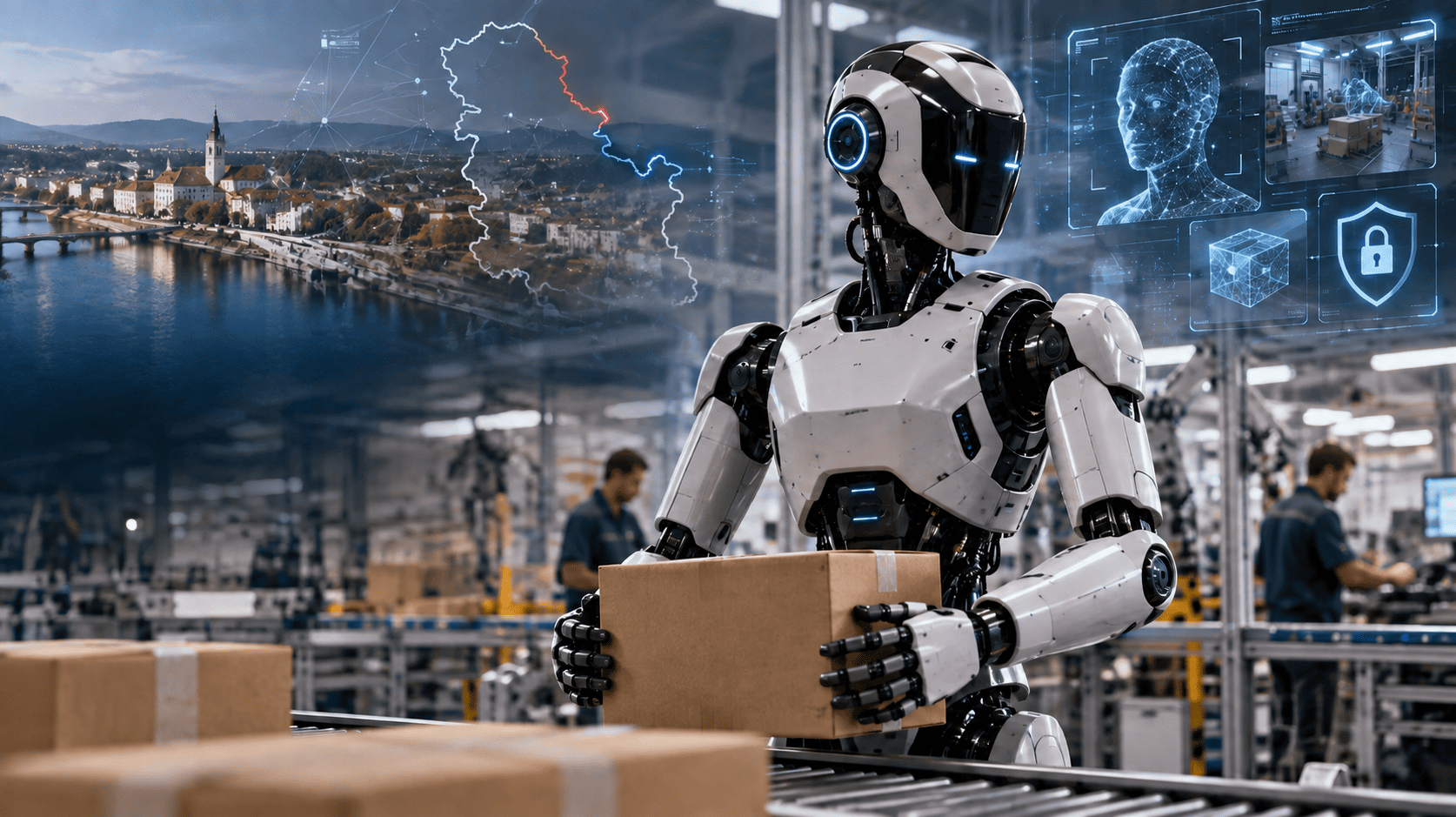
The production of humanoid robots in Šabac could create new opportunities for better cooperation between industry, universities, and research institutions. Speaking to Euronews Serbia, Assistant Professor Aleksandar Jokić from the Faculty of Mechanical Engineering, University of Belgrade, highlighted Serbia’s long-standing tradition in robotics research.
Serbian researchers have been active in the field for several decades, with internationally recognized contributions dating back to the pioneering work of researchers from the Mihajlo Pupin Institute. Among them, Academician Miomir Vukobratović made fundamental contributions to the theory of humanoid robot locomotion. The beginning of humanoid robot production in Serbia could provide an important opportunity to further strengthen this scientific and technological tradition.
According to Dr. Jokić, close collaboration between robot manufacturers and Serbian universities and research institutes will be essential for developing domestic expertise and creating internationally competitive research and innovation. Humanoid robots are currently being developed primarily for applications in industrial production and logistics, where they can perform tasks such as material handling, transportation, and manipulation. However, their widespread implementation is still at an experimental and testing stage. For safety reasons, most current applications are therefore focused on controlled environments in which interaction with people can be carefully managed. A key factor enabling this flexibility is the rapid development of artificial intelligence and machine learning. Modern research aims to provide robots with advanced perception and decision-making capabilities, allowing them to understand their surroundings, adapt to changing conditions, and operate more autonomously.
Researchers at the Faculty of Mechanical Engineering, University of Belgrade, are also addressing another important aspect of increasingly intelligent robotic systems — cybersecurity. Within the MCSecurity project, artificial-intelligence-based methods are being developed to enable mobile robots to detect cyberattacks and abnormal behavior. The objective is to recognize situations in which a robotic system deviates from its expected operation and react before people, equipment, or the robot itself can be endangered. Serbia already possesses considerable expertise in robotics, but continued development will require further investment in modern research equipment and closer cooperation between academia and industry. The emergence of humanoid robot production in the country therefore provides an opportunity not only for industrial development, but also for strengthening Serbia’s position in robotics, artificial intelligence, and advanced manufacturing research.
More information can be found at the following link.